Monday, September 7, 2009

The Pearl of Africa

“To travel is to discover that everyone is wrong about other countries.” Aldous Huxley

I have now been in Jinga for a couple weeks. Jinga is the playground of Uganda and likes to think of itself as the adventure capital of Africa, picking up new adrenalin junkies as quickly as Vic falls and Zimbabwe is losing them. There are a couple big white water rafting operations and a kayaking company running tours on the spectacular grade 5 rapids. Mountain biking, bungy jumping, jet boating and quad biking are all on offer here! it is understandable why the people of Uganda refer to their country as "The Pearl of Africa". Kenya attracts mainly upmarket tourists, who fly in for safari package holidays, so I did not see many other tourists while riding across the country so it has been a little strange to be constantly surrounded by young thrill seeking tourists.

My first few days here were mainly focused around trying to find some work on the river, doing filming for the rafting trips and cutting DVD’s in the evenings for that day’s clients. It turned out to be a little more tricky than I had hoped, most of the guys doing that sort of work here are free lance and only work for short periods of time but all the spots are taken at the moment and I arrived just as the busy season ended so things have suddenly quietened down substantially. Never the less, I will continue to try as I have been told I should be able to get a bit of work here and there. Next I had to sort myself out with some kayaking gear, I worked out that it would be cheaper to by a boat etc. than renting if I were to kayak for more than 7 days so that’s what I have done. I got quite lucky with a boat that fitted but broke the paddle I bought the first time I used it and am still borrowing a paddle until I can find another one for a reasonable price.
My first day on the mighty Nile was exhilarating and terrifying all the same! I had not done much kayaking in the last two years and was a bit apprehensive climbing into the boat and preparing to tackle what are arguably some of the biggest commercially run rapids in the world. I made it to the end without a swim and that was enough for me but I did realise that I was going to have to get a little bit of practice in before I could feel confident enough to work as a video boater. When doing filming for the raft companies you need to be 100% sure of what you are doing as you always go down the rapid first to set up, meaning there is no one at the bottom to save you should you take a swim and you also have to be able to eddie out of some of the rapids midway through to get the best shot. In short, you have to be good!


I have now spent a fair amount of time on the river but have had a few swims, which always batters the confidence. All the kayakers, mostly British, generally hang around together and collectively decide what section of river to run each day as there is always increased safety in numbers on the river. Last week all 11 of us all took a little trip down to an island in the middle of the river about 25km downstream. We stayed at the Hairy Lemon, which is a secluded retreat popular with the kayaking fraternity as it is very close to a famous play wave known as Nile Special. We spent 6 days there kayaking twice a day and not doing much else.
The ride to the Hairy Lemon was an adventure all in itself; I strapped my kayak and gear on to the back of the bike, atop the normal excessive load. It protruded a good deal on each side but after seeing some of the little 100cc scooters here carrying anything you could possibly imagine, I did not even feel as though it was that much of an achievement. I made my way tentatively back into Jinga town, across the dam wall and down a good tar road for about 30km, asking every local I saw for directions to the Hairy Lemon. I was sent down the wrong dirt track on more than one occasion and ended up bumbling along the Nile river bank on some tiny little tracks that invariably turn into footpaths before disappearing altogether. Eventually I came across a truck from one of the rafting companies that was heading down to pick up some of that days’ rafting clients so he showed me the correct road and I eventually got to the Hairy Lemon.
After a week practicing on a world famous play wave I was starting to feel a little more confident, it is quite a difficult wave to get on to as you have to use a ski rope that is fixed to a pole from the bank to ferry out to the correct position on the wave to begin surfing. I got to grips with the rope after a day or so but that was not the end of the challenge, the wave is very powerful and it’s extremely difficult just to stay on the wave. Towards the end of the week I found out just how powerful when I caught the wrong edge on my boat and had it whipped from beneath me so quickly that my shoulder popped out of its socket. Luckily it went straight back in but having to make two rolls afterwards did not help and that was the end of my play sessions on Nile Special. I took a few days off kayaking to try and let it heel. It was still quite painful after the first two days and I was unsure whether I was going to be able to do any more kayaking at all but luckily it has gotten a lot better and I managed to get back on to the water yesterday and had no problems with it.
During my time off the water I spent some time catching up with a bit of admin, doing a bit of writing and managed to visit a few child care centres to have a look around and see whether it might be worth doing a documentary for any of them. Unfortunately there was not a lot going o at the centres I visited but there are so many around Jinga that I hope to try and find one that might be able to use the positive exposure to create more opportunities for the kids. Hoping that can be next week’s mission.

Monday, August 31, 2009

Finding the source of the Nile

"When you travel, remember that a foreign country is not designed to make you comfortable. It is designed to makes its own people comfortable" Clifton Fadiman

A few days at Lake Naivasha gave me the chance to recharge my batteries after a few tough days riding. The bad roads had also taken their toll on the bike and so this was a perfect time to give the bike a little service and a nice clean. Lake Naivasha was one of the most popular areas for white European settlers and the area is now home to many flower farms. The miles and miles of hydroponic tunnels scar the landscape and no doubt have an effect on the ecosystem of the lake and surrounds but the labour intensive farming practices create many jobs. One local told me that the flower farms are responsible for 90% of the jobs in the area and I would guess that tourism makes up the remaining 10% as there are quite a few lodges scattered along the lakeshore.

I spent a couple nights camping under the huge acacia trees on sprawling green lawns at a spot called Fisherman’s Camp. It is quite a popular spot with the odd overland truck and quite a few backpacker type tourists passing through. The trees are home to hundreds of Colombus Monkeys and the vocal hippos venture out the waters at night to graze on the campsite lawn, separated from the tents by a single electronic wire. A popular attraction in the area is the nearby Hell’s Gate National Park and the hot springs found within the park. The park is unique in that you are allowed to ride bicycles within the park’s fences and it is simple to rent mountain bikes so I took a ride through the park’s impressive gorge to the have a look at the hot springs. It is a brilliant way to view game and the main road through the park has many grazers that remain relatively docile as you quietly pedal by. En route to the hot springs I also stopped at a huge pinnacle of rock known as Fischer’s Tower. The aptly named tower is a well known rock climbing spot and there I met Joseph, with whom I had arranged to do some rock climbing the previous day. Even though the gear hire and climbing pass was a little expensive I could not resist topping out on Fisher’s Tower (45m high) and the views from the top made it more than worthwhile.

From Lake Naivasha I made my way northwards on a short stretch to Nakuru. My mother’s side of the family is from this area and en route I stopped at a town called Gilgil to visit Rob Harte, my mother’s cousin. It happened to be a Sunday morning so I joined in the tennis game at the Gilgil Country Club on the old clay courts that I remember my grandmother telling me about, it was great fun. Nakuru is the fourth largest city in Kenya and is set just up the slope from the beautiful Lake Nakuru. The crater Lake is found within National Park borders so I was not able to ride inside but could still view the masses of flamingos and grazing buffalo along the lakes shore from the hillside up towards town. I visited the hospital where my mother was born, it was strange to ride around the town, all the buildings that looked as if they were once so new and grand were fairly run down and market stalls found on every street corner. I watched the sunset from the hill above town and then made my way to the Kunste Hotel for the night, another place I have stayed that I recognised from Ewan Macgregor and Charlie Booman’s Long Way Down TV Series.

After having a relatively easy past few days, I packed my bike with intent and decided to head straight for Jinga over the next two days. The road westwards from Nakuru towards Lake Victoria provided for some amazing scenery! Around Nakuru the landscape was fairly dry as the rains have evaded the area through the winter months but as I rode westwards the land changed from dry baron and rocky to green, lush and overgrown within the space of 10km. I looked back at one point and saw what almost looked like semi-arid desert, then turned around to be met by green hills covered in jungle and looming grey clouds overhead. After driving through miles and miles of tea plantations and even stopping to enjoy some extremely fresh tea on the side of the road, I was eventually greeted by the truly magnificent sight of Lake Victoria! A view so vast that, if I did not know any better, I could quite easily have mistaken it for the ocean. Just as I started to drop off the hills surrounding the lake, the heavens decided to open and unleashed some of the heaviest rain I have ever seen, let alone ridden through. With nowhere to take cover I just chugged along slowly through the downpour, counting the kilometres down one by one until I reached Kisumu.

Kisumu is the third biggest city in Kenya, it is found on the eastern shores of Lake Victoria and recently, has become increasingly famous as it is home to the family of Barack Obama. The whole of Africa is “Obama Crazy”, Kenya, in Particular, is “Obama Crazy” but the city of Kisumu is on another level of “Obama Craziness”. Almost every car, bus, scooter, billboard, street sign and house window is plastered with the American president’s face with stars and stripes in the background. It is a little disconcerting but encouraging to see how unified the people of Africa could become under the reigns of a deserving and honest leader.

After one night in the rather dingy YMCA hostel in Kisumu and a little night time shopping in their rather impressive shopping complex, I got back on the bike for another fairly long day of riding in an attempt to make it all the way to Jinga that day. I wrestled with a little morning traffic to escape the city centre but before long I was on the open road and heading for the Ugandan border. The road to the border took me over the Equator. I stopped on the side of the road next to the big “EQUATOR” sign for some obligatory pictures and was suddenly struck by the fact that I had ridden my bike all the way to the northern hemisphere! WOW!

The border crossing could have been easier had I not allowed an “Official Helper” to usher me through from office to office. This is always a mistake but he told me that he worked for immigration services and had the “badge” to prove it. I was too tired and lazy to argue for my border crossing independence so just followed him and my documents through the procedures of African border crossings. This crossing seemed to require a little more homework to be done and to be honest my helper probably saved me a little time up until we reached the insurance office. In retrospect I realised that the only reason he was so willing to take me under his wing was to try and rip me off beyond comprehension when it came time to buying third party insurance. After a lot of arguing about the apparently “negotiable” premium for third party insurance cover I eventually got up and stormed out. They tried to charge me exactly 10 times what I eventually ended up paying in the next town. The argument forced a border crossing policeman to get involved, he stood in between myself and the insurance salesman wielding a M16 rifle and at that point I realised exactly where I was and what was going on and tried to get out of that place as quickly as possible. Luckily the border police were privy to the dubious ways of the insurance companies and sort of took my side, or at least allowed me to walk away from the border post alive.

I drove away from the border completely livered with how the whole situation had escalated but a short stop at an insurance broker’s office in the next town provided some sort of relief when I had all my papers in order in half the time and for a fraction of the price I had almost paid at the border. The last 100km into Jinga flew by and I eventually rolled into town in the late afternoon. I drove around the streets for a while just getting orientated with the place I would call home for the next while. I drove over the dam wall and back struggling to comprehend that I was actually at the very top of the Nile River, then made my way down the river a few kilometres to the area where all the rafting operations and majority of tourists congregate. I found a bed at the extremely popular Nile River Explorers, got myself a beer and sat overlooking the mighty river. I have arrived!

Wednesday, August 26, 2009

Of Masais and Mountains

“I travel not to go anywhere, but to go. I travel for travel’s sake. The great affair is to move." Robert Louis Stevenson

One of the most beautiful aspects of travelling is experiencing new things every day. For much of the road up through Tanzania and southern Kenya the scenery was not necessarily breathtaking and the villages were not charming but it’s the novelty of strange places that poses such appeal!

I caught the night ferry back from Zanzibar to Dar es Salaam, boarding at 10pm and chugging slowly through the night to arrive in Dar at 6am. I chose the night ferry as the tickets were half the normal price and saved on a night’s accommodation in the process. Zanzibar, on the whole, was brilliant but it was a little weird to be in place much frequented by the package holiday type of tourist and a place where Mzungus are naturally perceived to have bottomless pockets. I did not hang about in Dar but rather decided to head for the Kenyan border straight away. I only spent a couple weeks in Tanzania in total. Partly because it is a fairly expensive country in which to travel but also because I constantly felt as though I was being ripped off by every “tour guide” or tout claiming to want “no strings attached” friendship.
The road north from Dar sailed beneath my tyres through sisal plantations and across the undulating landscape without too much trouble. I was not sure if I would make it through the border before dark so just decided to head from town to town and see how far I could get. A welcome addition on the Tanzanian roads were the small sign posts every 10km informing you of the distance to the next small town as well as the next major town, this took away much of the guess work on the road and resulted in less unexpected longer stretches that the maps do not care to share. I arrived in Tanga, on the extreme northern Tanzanian coast, in mid afternoon so decide to tackle the remaining 60km of dirt to the border that day. The 60km felt like 600km as the road was terrible! My bike and I rattled and shook for no shorter than 2 hours through the forest on the final stretch of Tanzanian soil. I tried to stop as little as possible as I was not sure what time the border would close but my hurry resulted in the death of a monkey, who tried to cross the road between my wheels and left me feeling guilty for my impatience. I got through the border without a hassle and was pleasantly surprised by the friendliness of the Kenyan immigration officials. One of the border guards took me under his wing and ushered me from office to office to get all the personal and vehicle paperwork done in record time.

From the border I cruised along the smooth tarmac for 70km under the setting sun and eventually arrived at Tiwi Beach under the rising full moon to be greeted by yet another beautiful white sandy beach and a comfortable bed in which to rest my worn body. After two long days of continuous travel I indulged myself with a day on the beach whilst a local welder reinforced my luggage rack that had felt the effects of the terrible road the day before.

Tiwi is only 50km south of Mombasa, which would be my next stop so the following day’s ride was short and sweet, the most exciting part of which was boarding the ferry for the 1km crossing to the island city. There was barely a queue to get onto the ferry, which was surprising considering the number of people constantly crossing to Mombasa Island. The three ferries worked like clockwork; 20 shillings (R2.00), 10 minutes and half a conversation later I was in Mombasa central, weaving my way through the traffic to the centre of town. I spent the afternoon in Mombasa strolling through the Old Town, which is similar to that of Zanzibar Stowntown but a little less touristy and, in my opinion, a little more interesting. Mombasa has been influenced through the centuries by the various forces of authority and this is evident in the segregated areas of old town. The Portuguese first landed there in the 16th century and took control for almost a hundred years before Mombasa leaders asked for military assistance from Omani forces to oust the Portuguese. Protection of Mombasa then alternated between British and Omani Navies until Kenyan independence in 1964. A self appointed tour guide walked me through the labyrinths, parting with his extensive historical knowledge of the town and slave trade as we went.

The next day I was back on the road and headed westwards towards Kilimanjaro. This involved the use of the main highway to Nairobi for the first 150km, which involved a serious game of “dodge the truck” as they blatantly disregarded my presence in their overtaking practices. From Voi I turned off the highway and cut through the Tsavo National Park on an EXTREMELY corrugated national road for just over 100k’s. The terrible state of the road meant that I had to concentrate hard on the best line through the corrugations and potholes and effectively meant that I probably missed a good amount of wildlife but I still managed to see the odd grazing antelope on the road’s verge. I spent the night in a town called Taveta. Taveta is on the border of Tanzania and is canvassed by a wonderful backdrop of Mount Kilimanjaro. From Taveta I faced probably my biggest challenge to date in trying to get to Kimana, on the northern side of the mountain and only 80km away. The road I would tackle was not on the map but I had been assured that it was in decent condition by the Tsavo game rangers. I chose this route as the road seemed to circumnavigate Kili, which it did but the low lying clouds and thick dust meant that I could barely see past my front wheel for most of the time. How the game rangers managed to use the words “good condition” in their description of this road, I do not know. The first 20km of the road was covered in about 10 centimetres of talcum powder textured dusty sand that made beach-sand riding feel like a breeze. After the dust ended, the corrugations came back and shook me all the way to Kimana. Although the road was tough and definitely got me down at times, I arrived in Kimana with a sense of achievement and revelled in the fact that the toughest times are often the most fondly remembered.

I awoke the next day to a wonderful, uninterrupted view of the snow capped mountain from Kimana town. I had tried to get into one of the many surrounding parks for the night but they are all aimed at the richer tourists so charged dollars: lots of them. Kimana town was a unique place to stay anyway, it is nestled in the heart of Masai country and even the town’s people walked around robed in traditional attire and all the beaded jewellery that goes with it. It was the type of village that doesn’t accommodate many a tourist and I enjoyed being the only white face people had seen in a while.

From Kimana I headed up towards Nairobi along more unforgiving dusty road for a good 40km before arriving at the most welcome sight imaginable: a brand new tarmac surface that was being built from Emali to Kimana... it’s at times like these that I could not appreciate the Chinese ambitions to tarmac Africa any more. I even bent down and gave the tarmac a kiss... an action that left the local onlookers a little perplexed but could not even begin to describe my joy! It was then straight sailing to Nairobi until I reached to chaotic streets of the capitol city. Chaotic is actually an understatement! It was pure madness that left me feeling more pumped full of adrenalin than any bungy jump or sky dive ever could. I managed to find my way to a Suzuki dealership where I purchased a new oil filter and then got myself to a backpacker lodge and off the bike as quickly and safely as I could. Nairobi seems to contradict the relative poverty of the rural villages with its spiked skyline and obvious wealth of the average citizen. The city did not give me the feeling of a safe environment. I could see how it has as gained its unwanted reputation and scornful nickname: Nairobbery. A night there was enough time to do my shopping, banking and get out. I Have now arrived at the beautiful Lake Naivasha and have been sitting writing this, looking over the calm waters, filled with flocks of water birds. A storm is brewing over the horizon and the distinct smell of earth quenching rain tells me it’s coming this way.

Saturday, August 8, 2009

Settling into life on the African Road

LEG 3: (as per Quad and offroad SA magizine article no. 3) The third month and third leg of the Africa Uncut Motorcycle Expedition journeys from Nkhata Bay in Malawi up to Zanzibar.

“If you reject the food, ignore the customs, fear the religion and avoid the people you might better stay at home” James Michener

When travelling Africa on a bike, or by any other means, it is so important to try and immerse yourself in the local people and their culture to gain the most from the unique experience of crossing this Dark Continent we call home and yet know so little of. Each time I cross a border it amazes me to see the instant changes in religious allegiances, traditional attire, construction techniques and staple diets despite the identical landscapes and minimalistic income levels. One cannot help but wonder how these cultural divides came to be and how severe the differences on either side of borders were before colonisation transformed Africa. One thing is for certain, the cultural and traditional practices one experiences whilst travelling Africa make it a worthwhile journey, let alone the sheer beauty of the majestic landscapes.

After I said goodbye to my travelling companions, Dave and Paul, I decided to take a break from the frantic schedule of the previous five weeks and spend some time exploring Nkhata bay and the surrounds. Constantly being on the move results in one missing the comfort of familiarities. Spending a little time in one place, where there is time to make friends and learn about the working gears of a particular place’s inhabitants can provide a temporary safety blanket. Nkhata Bay is a brilliant little town situated about half way up the western shore of Lake Malawi and is very popular with backpacking travellers. The town centre bustles throughout the day and night, there are a few good restaurants and nice places to stay, all of which are right on the water’s edge and all poses some sort of appeal to the various shapes and sizes that pass through the town. I made camp at a place called Mayoka Village, one of the most popular places and understandably so as it really is a beautifully cosy little spot. I opened the tent each day to be greeted by perfectly blue skies and crystal clear shimmering water a couple meters from the door. I got to know quite a few of the locals and quite a few passersby that also seemed to have anchored themselves there to catch their breath whilst on lengthy trips.

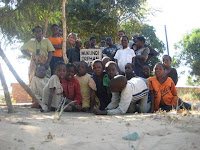
I thought it best to use my time settled in one spot a bit constructively and completed a charity documentary for an orphan care project 50 km south of the town. It is a really pro-active project looking after orphans who have lost their parents mostly due to the devastating effects of HIV and AIDS. I spent a day visiting about eight different orphan care projects to get a feel of what they do and how they could benefit from a promotional documentary and the Mukundi Orphan Care Charity Based Organisation (CBO) stood out heaps above the rest. The project is run by volunteers and serves five surrounding villages. They look after about 65 orphans and the chiefs from the surrounding villages contribute food on a monthly rotation basis. They have a carpentry workshop and tailoring workshop where the kids are taught valuable skills that they can carry forward with them into adult life and the finished woodwork products and dresses etc are sold at markets to bring in money that subsidises the kids school fees, food and clothes. They also feed the children, using mainly vegetables grown in their own gardens and meat from their pig and chickens projects. I could not help but notice, during my day spent filming and getting to know the kids, that they are all so happy and full of hope despite their heartbreaking life stories. What also struck me was the incredible kindness of the 10 adult volunteers, who give of themselves so freely to help the orphans despite being so poor themselves. Their appreciation of my time and effort made the documentary more than worthwhile. They have various overseas contacts that have donated money to them in the past or have considered supporting their fantastic project but have been understandably apprehensive as it is so hard to assess whether the money will end up in the right hands and for the right reasons. Hopefully the documentary will dismiss any doubts regarding the project’s objectives and administration as they are truly doing a remarkable job.

I extended my Malawian visa to avoid feeling too rushed through the northern reaches of the beautiful country and so decided to do a little more exploring with my extra time. I braved the famous Ilala Ferry once more, this time in a northerly direction and chugged through the night up to an extremely remote spot called Ruarwe. The northbound ferry was far less chaotic, which meant I could tolerate a third class ticket quite easily where the food and drink is far cheaper and the experience far more African. Ruarwe is exceptionally beautiful and the little Zulukini Lodge: exquisite. It is set on the water’s edge, adjacent to a beautiful river with a waterfall dropping into the lake. The lodge’s extremely remote setting means that it lies within a largely untouched part of the lakeshore but also means that it is only accessible via the ferry so the biggest problem with visiting Ruarwe is the ferry’s schedule. The ferry runs on a weekly basis up and down the lake so you can either spend one night or eight nights there if you need to head back down south. It would have been nice to just relax in such a beautiful setting, uninterrupted by nuisances such as electricity and shops, for a full week but I felt the need to get back to my bike and back onto the road so I opted just to spend one night in this piece of paradise.
Once back in Nkhata I noticed a few hairline cracks starting to appear in my luggage rack so I took it all apart and got a local welder to strengthen it all up, which took him less than an hour but dismantling and re-assembling the bike setup, whilst giving it a little service at the same time, took me the better part of 2 days. Once it was all completed I felt happy to get back on the saddle on venture into the unknown knowing that things were solidly fixed and all bolts fastened. The road from Nkhata took me northwards up to Mzuzu, Rumphi and eventually Livingstonia. The ride was so beautiful that I did not even mind when I realised that I had been travelling for 60km in the wrong direction at one point as the scenery almost made it a worthwhile detour. It roughly followed the western lakeshore of Lake Malawi, sometimes cutting inland to navigate its way through the mountain passes but invariably came back to the lake. Portions of the road were cut into the sides of the steep slopes with the outer edge dropping down to the lake and whilst carving in and out of the sharp bends on the way down the mountain, trying my best to keep my eyes on the road and off the infinite view, I could only think of how similar it was to a short cruise over Chapman’s Peak Drive in Cape Town. The last 20km up the steepest of mountains proved to be the biggest challenge of the days riding and possibly the entire trip. Livingstonia is an old missionary town that was placed on top of the mountain to get away from the malaria threat of lower lying areas. The road from the lakeshore town of Chipata up to Livingstonia is considered dangerous in the dry and virtually impassable in the wet. The loose gravel track is famous for its 21 hairpin bends, which hikers are warned to count so as not to prematurely assume they have made it to the top. It winds its way up the mountain side in a continuous struggle against gravity and corning the 180 degree bends on a laden bike in first gear is an art that you only get to grips with once you are pretty much at the top.

Livingstonia provides for a fascinating glimpse into Malawi’s colonial past. A stroll through the wide dusty streets past the old hospital, colonial mansions, church and through the museum leaves you feeling as if you have gone back in time. I also took a walk to Manchewe falls, a 50m high water fall that once again afforded magnificent views where one can see all the way to the Mozambican side of the lake. I stayed at Mushroom Farm Backpackers, a beautiful spot on the cliff’s edge with breathtaking views, good food and an atmosphere that forces relaxation. The owner of the backpackers was overseas and so it was being run run by Paul, an Aussie, who was in the throes of planning his own African motorcycle odyssey on a 200cc bike. I have met many other travellers on bikes, all of whom are fairly surprised to see me on my small bike and most of whom ask the same questions such as “does it have enough power?” To which the answer is YES! Most roads in Africa are littered with goats, chickens, potholes and people, which makes it difficult to travel faster than 100km/h no matter the size of engine between your wheels. To date I have not really felt the urge to want to go faster but have appreciated the 180kg less that I am hauling around when compared to the average motorcyclist in Africa on a GS1200. Spares have not been an issue to date as my liitle Suzuki has performed admirably in the mechanical department and even if I were to have trouble, the bike is so similar to every other locally driven bike in Africa (and there are lots) that I could probably get any spare part within minutes of breaking down. I could honestly say, at this stage, that if I were to repeat the trip with bottomless budget I would consider the same bike again; it’s that perfect for Africa!

After a couple nights in Livingstonia I headed back down the 21 hairpin bends, which was possibly more difficult than the accent but still lots of fun. Once back at the lakeshore I made for the Tanzanian border, a 200km ride along good tar that flew by and before I knew it I was saying goodbye to Malawi. The border crossing was as simple as I could have hoped, despite the many warnings I had received about the hassling touts that lurk between the border posts and do their utmost to rip off any unsuspecting tourist wanting to change money at their “special rates”. Once in Tanzania the price of fuel decreased slightly but still remained relatively high when compared to the good old Republic of South Africa. I did the last 100km to Mbeya in rapidly decreasing light and warmth and arrived in the bustling town just after dark. It was strange to put my watch forward an hour despite being further west than the night before. The town centre was tough to navigate in darkness and I ended up paying a taxi driver to lead me a lodge for the night, where I learnt that there were no beds left. Thankfully the manager allowed me, and the other 8 backpacking travellers who rolled in at the same time, to camp on the small patch of hotel lawn and sleeping did not prove a challenge after a long day on the road.

Mbeya did not seem to have much to offer the average tourist but I still made the most of the abundant banks and selection of shops for most of the next morning. Once all my admin was done I escaped the regional capital and headed west on a two day marathon stretch across Tanzania. The first stretch of road took me through some tea and eucalyptus plantations and then thrust me into the harsh African wilderness. In the middle of Tanzania one feels as though you could be driving through the Kruger National Park, just without the wild animals. It is typical arid bushveld with pointed peaks scattered along the horizon. The first 100km of road from Mbeya runs parallel to the famous Tazara railway (or Game Train as the tourists call it) connecting Kapiri Moshi in Zambia to Dar es Salaam. Just before I reached Iringa I stopped at a world heritage site known as Isimila Stone age site, protecting the region where many significant archaeological finds have been excavated. I took some quick pictures and got back on the road, determined not to be left on the bike during the twilight hours. After a short stop to get some food supplies in Iringa I made my way to a beautiful riverside campsite and set up my tent under the setting sun. I had only managed to put about 350km under the belt after my late start which would mean an early start the following day in order to tackle the remaining 500km to Dar.

From Iringa I dropped off the high lying interior of Tanzania, constantly losing altitude for about 50km along a winding road between mountain peaks. The absence of arrester beds for the trucks meant that they crept down the slopes at snail’s pace and crept up on me as I approached with distinct urgency, requiring careful concentration. The temperature increased dramatically from the top to the bottom and landscapes extended further and further the more I descended out of the early morning mist. The road then made it’s way through a valley littered with Baobabs as far as the eye could see along the northern border of the Udzungwa Mountains National Park. They were doing road works in patches all the way from Iringa to Dar with only one lane open in most places but the unenthused “stop/go technicians” did not feel it necessary for motorbikes to wait out the oncoming traffic and consistently ushered me through on arrival trusting that I could safely skirt around the head on trucks and cars. At moments like these I just smile to myself and say TIA (This Is Africa).

I chose this specific route through Tanzania so that I could pass through the Mikumi National Park and was not disappointed when I came across a herd of elephants within a kilometre of entering the park’s borders. I was careful not to dismount the bike, or even switch it off, as I took a couple pictures of the 20 plus herd grazing about 20 meters away with the matriarch constantly facing me and eyeing me out. The rest of the 100 odd k’s through the park was everything I had hoped it would be with another herd of elephant, a couple sizable herds of buffalo and plenty giraffe, zebra and impala lining the tarmac.

After I exited the game reserve I knew it was just going to be a straight slog all the way to Dar and I wasn’t far off. I only dismounted the bike to put fuel in the tank and marvel at the occasional authentic Maasai Warrior herding his cattle through the middle of nowhere. I neared Dar in the late afternoon, just in time for rush hour traffic. The traffic jam started about 40km out of town and only got worse the closer I got. I passed pretty much every car that had passed me throughout the day as I weaved between the gridlocked traffic and along the verges, usually just sitting behind a local on a bike so that he could make judgment on what was acceptable motorcycle politeness. Once in Dar itself things got chaotic with cars and taxis darting everywhere and I soon realised that the only way I was going to make it out alive was to maintain a faster speed than the surrounding traffic and weave my way through with affected courage. I made it to a hotel in down town Dar with only having had two minor bumps from cars and another very near miss where I stupidly stopped at a red robot and was almost mauled by the car behind me... apparently traffic lights are more of a waste of electricity than anything else in rush hour traffic in the centre of town.

The next day I arranged to leave my bike with a friend of my brother and boarded the ferry to Zanzibar. After the treacherous journey across Tanzania I needed a couple days to relax and rebuild my will to survive the African roads. Zanzibar was almost exactly as I had imagined it to be, a contrasting mix of the historic Stonetown on the one side and beautiful white palm lined beaches inhabited by “package holiday” tourists in their top dollar lodges on the other. I spent a couple days in Stonetown. After a day on a tour through the spice plantations I spent most of my time wondering through the labyrinths between the aging ancient architecture. At night all the Mzungus (white people/tourists) congregate around the open air market where there are lots of little stands selling fresh sea food cooked to your taste and flavour. A short trip up to the northern reaches of the island gave me the chance to relax on the beach, treat myself to an incredible scuba dive and start to write this. From here I plan to head back to Dar and continue northwards up the coast into Kenya, the beauty of having so much time in which to travel is that no plan is set in stone so I can just see where the road takes me.

Thursday, July 16, 2009

BECOMING A LOCAL IN NKHATA BAY

“A true traveller goes by foot... and even then he sits down a lot of the time” unknown

I feel as though I have become a little stuck in Nkhata Bay. I have been here almost two weeks now which has not been a bad thing by any means. Nkhata Bay is a brilliant little town situated about half way up the western shore of Lake Malawi and is very popular with backpacking travellers. The town centre bustles throughout the day and night and there are a few internet options, good restaurants and nice places to stay, all of which are right on the water’s edge and all poses some sort of appeal to the various shapes and sizes that pass through here. I have been staying at a place called Mayoka Village, one of the most popular spots and understandably so as it really is a beautifully cosy little spot. I open the tent each day to be greeted by perfectly blue skies and crystal clear shimmering water a couple meters from the door. I have got to know quite a few of the locals and quite a few passersby that also seem to have anchored themselves here to catch their breath whilst on lengthy trips.

I have threatened to leave a few times but there is always something on the go and some or other reason to stay another day or two. On Saturday night Mayoka celebrated their 10th birthday with a “Go Green” party, attended by everyone and enjoyed by all. I thought it best to use my time here a bit constructively and have just completed a charity documentary for an orphan care project 50 km south of town. It is a really pro-active project looking after orphans who have lost their parents mostly due to the devastating effects of HIV and AIDS. I spent a day visiting about eight different orphan care projects to get a feel of what they do and how they could benefit from a promotional documentary and the Mukundi Orphan Care Charity Based Organisation (CBO) stood out heaps above the rest. The project is run by volunteers and serves five surrounding villages. They look after about 65 orphans and the chiefs from the surrounding villages contribute food on a monthly rotation basis. They have a carpentry workshop and tailoring workshop where the kids are taught valuable skills that can carry forward with them and the finished woodwork products and dresses etc are sold at markets to bring in money that subsidises the kids school fees, food and clothes. They also feed the children, using mainly vegetables grown in their own gardens and meat from their pigs and chickens projects. I could not help but notice, during my day spent filming and integrating with the kids, that they are all so happy and full of hope despite their heartbreaking life stories. What also struck me was the incredible kindness of the 10 adult volunteers that give of themselves so freely to help the orphans despite being so poor themselves.


I will return to the care centre tomorrow on route to Livingstonia to give them the 10 DVD copies of the documentary. They told me that they have many previous donors and potential overseas donors that they feel might reach into their pockets should they witness the great work that is been done at the care centre... I hope so!


My Malawian visa expires on Saturday so I have an ultimatum to leave Nkhata now but I have considered extending it as I have been told of a couple really fantastic spots between here and the Tanzanian border. Lucky for me, that’s as tough as the decision making in my life gets for now. Watch this space to see where I end up next cause I don’t know these things.

Tuesday, July 7, 2009

A LITTLE ISLAND GETAWAY

“When preparing to travel, lay out all your clothes and all your money. Then take half the clothes and twice the money.” Susan Heller

The above is true, very true!!!!! We have a little rule amongst us that if we haven’t used something for a whole month then it is wasted space and needs to find a new home. As for the money.... too much is never enough and we have realised that Malawi is a tad more expensive than we had been hoping... but the experience is more than worth it!

We left the bikes in Nkhata Bay for a week as we boarded the chaotic Ilala ferry to Chizimulu Island. Chizimulu and Likoma Islands are found on the Mozambiquan side of the Lake but are part of Malawi. Boarding the ferry was very exciting as we found ourselves moving with the flow of locals onto the gangway. Eventually we got stuck and resided to climbing up the side of the ferry and onto the second floor. On the ferry we treated ourselves to first class, this means you get to sit/sleep up on the top deck and enjoy a little more room to move around. The 5 hour trip took us through the early hours of the morning. We clambered off the ferry and onto a row boat half asleep and were rowed to Wakwenda Retreat arriving at about 4 am.
Our 5 days on the island were fantastic. We had a nice group of about 10 people on board and spent our days swimming, snorkelling, reading and chilling out. We made an effort to fill our days with various activities, getting everyone involved in heavily wagered games of volleyball and some even tried their hands at fishing... catching more of sunburn than anything else but that’s not the point. One day we decided to try and find a goat to slaughter and eat. This proved to be an all day activity as we traipsed around the island, on a wild goat chase through the villages in search for a “goat for sale.” We eventually found our victim and lead him back to the backpackers where William, the barman, helped us to kill it, skin it and butcher it into braaiable sized chunks. It was a meat feast, cooked to perfection and enjoyed by all! The losers of the volleyball that day were forced to eat the cooked goat’s penis, a fate that I do not think they had fully considered before taking on the challenge but a true African experience none-the-less.
Wakwenda Retreat is one of the most beautiful places I have visited to date with a bar perched on an outcrop of rocks and little decks scattered between the boulders resembling a more top dollar styled lodge. Our plan had been to stay half the time on Chizimulu Island before heading across to Likoma but this involved a small sail boat crossing and the winds were not cooperating so we happily stayed put in paridise for the remaining 3 days. The ferry trip back to the main land was a repeat of the outbound voyage but in reverse this time. We chugged through the night arriving back at Nkhata bay just after sun rise.

Arriving back in Nkhata meant the parting of ways for the group of travelling companions that had all got to know each other quite well over the previous week and the parting of ways for our little motorcycling trio. Dave and Paul departed yesterday for Zambia en route back to South Africa and I will head North to Livingstonia tomorrow. It has been so great to have company on the road and in between and I was left feeling a tad lonely as they drove off yesterday but time moves on and so does the adventure. New places, people and experiences await. Good luck with the trip back to SA guys, they will be heading through Zambia to Vic falls before crossing the Makgadikgadi Pans in Botswana and traversing a couple game reserves before crossing home borders.

I have spent the last day or two helping a local musician to produce some CD’s and we have even put a little music video together of his most popular song: How big is the Lake? He is a fantastic chap that is in the process of starting up a home based care project for orphans and elderly people within their community just outside Nkhata. Michael Mountain is also a talented musician and could do quite well with the right break. All he needs is a little help so I am happy to help someone who pays the favour forward. His music video has proved quite the hit and he sold out the first six copies this morning in a matter of minutes so hopefully that break will come sooner rather than later for him.

Internet is bound to be sparse as I head north from here but I will catch up with you all when I get to wherever I am going.

Monday, June 29, 2009

MALAWI TIME

By Paul Stokes and Chris Fisher
“If you reject the food, ignore the customs, fear the religion and avoid the people you might better stay at home” Stanley Michener

We have arrived in Malawi and been welcomed by a million white teeth wielding locals all the way. The Malawians are a notoriously friendly nation; you don’t have to try hard to make friends here, although many of the people that swarm you at every stop end up pulling out all sorts of curios, cards, necklaces and anything else you may be willing to part with a small portion of cash for.
We spent a full day in Blantyre shopping at the South Afrian style shops and tightening bolts on the bikes after the endless corrugations the day before. Blantyre is a relatively clean and safe African city with a real little CBD littered with recognisable banks and forex outlets. Apart from the necessities, there isn’t much else to do there so we headed for the lake as soon as our bums would allow us to get back onto the saddle. The ride up to Cape Maclear, on the southern tip of the lake was beautiful. Rolling hills and huge Baobab trees around every bend made the 3 hours of riding a breeze. I even stopped complaining about how sore my bum was for a little while. We passed some comical signs; “Toys’R’us” was one that we saw carved out of wood, where the Locals were selling intricately carved wooden tractors and trucks. A golden arched “MacDonald’s Chips” was selling a selection of French fries or French fries with salt on the verge of the road.

We thought at the start of our trip that travelling at 80-90 kph would be painfully slow, however, we’ve managed to get to our destinations faster than some of the cars who were travelling in the same direction as us. This is due to our ability to avoid, what feels like 90% of Malawi’s goat population living on the side of the roads, with relative ease. If you aren’t a goat lover before you come to Africa...don’t think that coming here is going to amend your affections towards the destroyers of the African Continent!
The turn off to Cape Maclear followed a heavily corrugated stretch of dirt road, about 16 k’s through the Malawi Parks reserve, the bushveld was stunning! Arriving at Fat Monkeys, we were met with smiles all the way. The owners were very friendly, and made our arrival as hassle free as possible, which ended up being the first place in Malawi where we did not have to pay upfront for accommodation. Setting up the tents, while admiring the most beautiful sunset we have ever seen made us realise that there is nowhere else on earth we would rather be at that moment. The feeling of content that comes over you at the lake must be my “9th wonder of the world” (the 8th wonder is Dave’s TW200 making it all the way to Malawi with no problems at all, basically the most reliable and fuel efficient bike out of the three, however by far the slowest!)

The next day we awoke to a perfect day once again, a common occurrence here in Malawi, along with the calls of the nearby Fish Eagles. We were met by an elderly man named William Shakespeare, who offered to bake us a banana bread loaf for breakfast the next day for 1500 kwacha. In no uncertain terms Shakespeare then proceeded to ask if we would like to add an extra 500 kwacha for his “special ingredient”, at which point we laughed and declined the happy additive. The warm banana bread was delivered to our tents at 8 sharp the next morning and came in handy as a snack for our astonishing full day out on the water with a tour guide named Isaac. Isaac escorted us from island to island on his aptly named boat “The warm heart of Africa” an affectionate nickname for this friendly country. The snorkelling was as good as he had told us it would be with an array of brightly coloured tropical fish clumped between the boulders within the crystal clear waters. It makes it hard to believe that you are swimming in a lake. After an “all you can eat” fish braai for lunch on an island we were treated to a spectacular show by the fish eagles. The beautiful birds of prey answered Isaac’s invitational whistle and swooped down to grab a free fish a mere 10 meters from the boat. It was incredible to witness up close and personal.

Things were starting to become a little settled in Cape Maclear, which is a sure sign that it’s time to move on. We headed northward up the western shore 370km to Kande Beach. The views were breath taking all the way, sometimes crossing river mouths entering the expanse of the lake. As we got closer to Kande Beach the mountains started to rise up to our left, shadowing the early afternoon sun. We were stopped by some important looking policemen en route to Kande. Before departing on our trip we were warned that we would be stopped often by police everywhere but to date they have found little interest in our motorbikes and so we have been ushered straight through the continuous series of road blocks. These guys had other plans and were adamant to see our licences, insurance details and any other important looking documents. I think we could have shown them our Ster Kinekor Movie Club cards and they would not have known the difference. We all had different policemen interrogating us and after we left we worked out that we all showed them different documentation that gained similar satisfaction.
Kande Beach is yet another idyllic beach with glassy waters and a small island about 500meters offshore. We rented a kayak and paddled out to the island for some more snorkelling and rock jumping. Kande beach is a popular stop for overlanders with an expansive bar and hammocks connecting all the trees. It happened to be “Market day” in the town so we took a stroll through the exuberant brightly coloured stalls and even managed to find a fish, vegetable and nSima (pap) meal for a wopping R10.

Leaving Kande we followed the road north for only 50km’s to Nkhata bay. The short stretch of road was a continuous stretch of fast winding bends through a mass of rubber trees on either side of the road. The obvious opportunists/entrepreneurs were ever present, selling balls made of rubber, which they sap from the trees with a simple, although clever little system where they peel back the bark so that the sap oozes out and drops into a cup attached to the side of the tree. We rolled into Nkhata after what will probably be the shortest day on the bikes and checked into our accommodation at the intricate Mayoka Village. Mayoka Village consists of a number of beautifully constructed twin rooms, dorms and camp sites all linked by enchanted pathways. It is set on a steep slope dropping straight into the blue waters of the lake. It is a very festive spot with a brilliantly constructed bar perched over the water, playing host to bands and serving fantastic meals all day long. We are not complaining about our three day wait here for the ferry to the islands.